Table of Contents
▼
What should non-US residents actually compare in a payment gateway?
Compare five things: country eligibility, entity requirement, payout route to your home country, effective fees, and tax handling. Brand popularity is not one of them.
Most comparison posts rank gateways by how well they work for US founders. That is the wrong list for you. A gateway that approves a Wyoming LLC in two days is useless if it cannot send money to a bank in India without eating 4% on conversion.
There are three models, and they behave differently for non-residents:
- Direct processor — Stripe, PayPal. You are the merchant of record. You handle chargebacks, sales tax and refunds. Approval is the hard part.
- Merchant of record (MoR) — Paddle, Lemon Squeezy, Gumroad. The MoR is the legal seller. It handles global sales tax and compliance, and pays you a cut. Higher fees, far less paperwork.
- Marketplace/platform — Shopify Payments, Whop. The platform processes payments on its own rails, so eligibility is tied to the platform's country list and your store's legal entity.
Eligibility almost always comes down to one thing: do you have a US legal entity and an EIN (Employer Identification Number — the IRS tax ID for your company)? Gateways built for the US market ask for it because it proves your business is a real US taxpayer. That single requirement is why so many non-residents form a US LLC before they ever open a Stripe account [1][6].
Stripe for non-US residents: what works and what doesn't
Stripe works for non-US residents in two ways: a local Stripe account in your country of residence if Stripe operates there, or a US Stripe account tied to a US LLC and EIN. Which one you get changes everything about payouts, features and risk.
Stripe's own documentation is blunt about the local-account route. To open an account in a country different from your primary business country, you need a legal entity, a tax ID, a physical location and a phone number in that country [7]. You cannot simply pick "United States" from a dropdown and start charging cards.
For a US Stripe account, Stripe says registered businesses must be registered in the US, even if the owner is not [8]. In practice that means:
- A US LLC (or corporation) in good standing
- An EIN from the IRS
- A US business address — a registered agent's address usually works
- A US phone number — a virtual number is commonly accepted
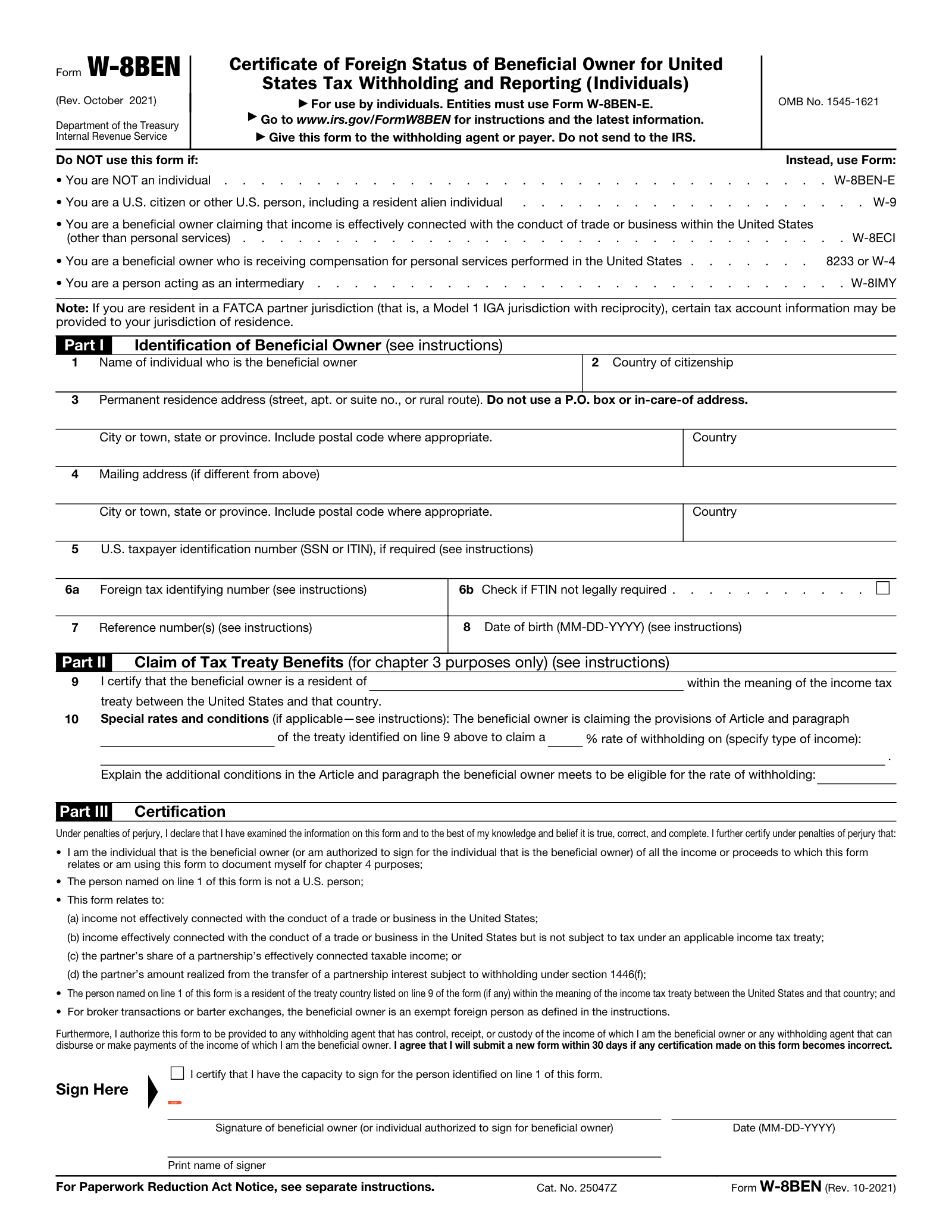
Official form (IRS.gov): Form W-8BEN official PDF
Payouts are where people get stuck. Stripe US sends money to a US bank account. If you live in India, you need a way to receive USD in the US first. The common routes are a US business bank account (Mercury, Relay), or a Payoneer/Wise USD receiving account that gives you US routing and account numbers. From there you move the money home.
The pitfall that kills accounts: signing up with your personal details, a personal Gmail, or your home-country address while claiming to be a US business. Stripe's underwriting team matches your EIN record against what you typed. When the two disagree, you get a freeze and a request for documents you may not have. [INTERNAL LINK: EIN for non-US residents]
PayPal and Shopify Payments: what non-residents can realistically use
PayPal is the most widely available option for non-residents, but its business features and withdrawal options vary sharply by country. Shopify Payments requires a US entity and EIN for a US-based store — there is no workaround.
PayPal. You can open a business account in most countries where PayPal operates. The catch is receiving USD and withdrawing to a local bank, which can stack currency conversion on top of withdrawal fees. PayPal is also stricter about business use on personal accounts — running a store through a personal account is how people get limited.
Shopify Payments. Available only in a defined list of countries. For a US store, Shopify requires the business to be registered in the US and to supply an EIN, plus a bank account that can receive USD payouts. If you are selling as a non-resident with a US LLC, that usually means a US business bank account or a compatible payout service.
Can you use Shopify Payments without an EIN? For a US store, no. Shopify's onboarding asks for the tax ID, and a foreign tax ID does not satisfy it. The workaround is to skip Shopify Payments entirely and plug in Stripe or PayPal as a third-party gateway on your Shopify store. You lose the built-in Shopify checkout advantages, but you keep selling.
Merchant-of-record alternatives: Paddle, Lemon Squeezy, and more
Merchant-of-record services accept non-residents without a US entity and handle global sales tax for you. You pay for that in fees, typically a few percent above direct-processor rates.
Here is the honest tradeoff. With Stripe you are the seller: you collect the money, you owe the sales tax where it applies, and you deal with chargebacks. With an MoR, the MoR is the seller of record. It collects from your customer, remits VAT and sales tax worldwide, and pays you a net amount. For a solo founder selling software to 40 countries, that is worth real money in accountant hours.
- Paddle — accepts non-residents, handles VAT and sales tax, pays out via bank transfer or PayPal. Requires product approval, so plan for a review period.
- Lemon Squeezy — popular for SaaS and digital products, accepts non-residents, pays out via PayPal or Wise.
- Gumroad — simplest for digital products, least customizable, highest effective fees.
| Option | US entity needed? | Handles sales tax/VAT? | Payout route | Fee posture |
|---|---|---|---|---|
| Stripe (US account) | Yes — US LLC + EIN | No, you do | US bank / Payoneer / Wise | Low per-transaction |
| PayPal | No | No | Local bank, varies by country | Standard + conversion |
| Shopify Payments | Yes — US LLC + EIN | Limited | US bank account | Standard |
| Paddle | No | Yes | Bank transfer / PayPal | Higher |
| Lemon Squeezy | No | Yes | PayPal / Wise | Higher |
| Gumroad | No | Yes | PayPal / bank | Highest |
Check the current official fee page for each — rates change and vary by plan and volume.
How do non-residents get payouts to their home country?
Use a USD receiving account — Payoneer, Wise, or a US business bank account — to catch the gateway payout, then transfer home. Payoneer and Wise both give non-residents US routing and account numbers without a US LLC in some cases, and integrate with Stripe and PayPal.
- Payoneer — US receiving account (ACH), works with Stripe and PayPal, withdrawal to local bank for a fee.
- Wise — multi-currency account with US routing numbers, converts USD to INR or other currencies, transparent conversion cost.
- US business bank account — Mercury and Relay both publish that they accept non-resident founders with a US LLC. This is the cleanest route because Stripe pays directly via ACH with no intermediate hop.
Payout speed after the gateway releases funds is usually 1–2 business days, though the gateway itself may hold funds for a rolling reserve period. Compare the all-in cost, not just the headline fee: gateway fee + currency conversion + withdrawal fee is the number that matters. [INTERNAL LINK: US business bank account]
Which gateway fits your business model? A decision framework
Match the gateway to what you sell, then to your volume, then to your tolerance for tax paperwork.
| Business model | Recommended first choice | Entity needed |
|---|---|---|
| SaaS / digital products, global customers | Paddle or Lemon Squeezy (MoR) | No |
| SaaS, mostly US customers, scaling | Stripe US | US LLC + EIN |
| E-commerce / dropshipping | Stripe US, or Shopify Payments | US LLC + EIN |
| Services / consulting | PayPal, or Stripe US | Optional |
| Low volume, testing an idea | Gumroad or PayPal | No |
If your customers are mostly American, a US gateway improves conversion because the checkout looks local and avoids cross-border decline rates [13]. If your customers are global and you sell digital goods, an MoR saves you from registering for VAT in a dozen countries.
There is no single best gateway. There is a best gateway for your model, your volume and your willingness to form a US entity.
Common Mistakes
Assuming Stripe works in your country. Stripe supports a specific list of countries, and it is not universal [2]. Signing up from an unsupported country, or misrepresenting your location, gets the account closed and the funds held.
Using a personal PayPal account for business. Personal accounts are not built for volume, and PayPal limits them when commercial patterns show up.
Applying for Shopify Payments before getting an EIN. The application stalls at the tax ID field. Get the EIN first. [INTERNAL LINK: EIN for non-US residents]
Ignoring payout and conversion costs. A 2.9% gateway fee plus 3–4% currency conversion is a very different business from 2.9% flat. Model it before you commit.
Skipping IRS forms. Gateways ask for W-8BEN or W-8BEN-E during onboarding. Ignoring the request can trigger backup withholding.
Name mismatches. The name on your LLC, EIN, bank account and gateway must match. A single inconsistency is the most common reason verification stalls.
What IRS forms do payment gateways ask for from non-residents?
Non-residents generally submit Form W-8BEN (individuals) or Form W-8BEN-E (entities) to certify foreign status and claim treaty benefits. US persons file Form W-9 instead.
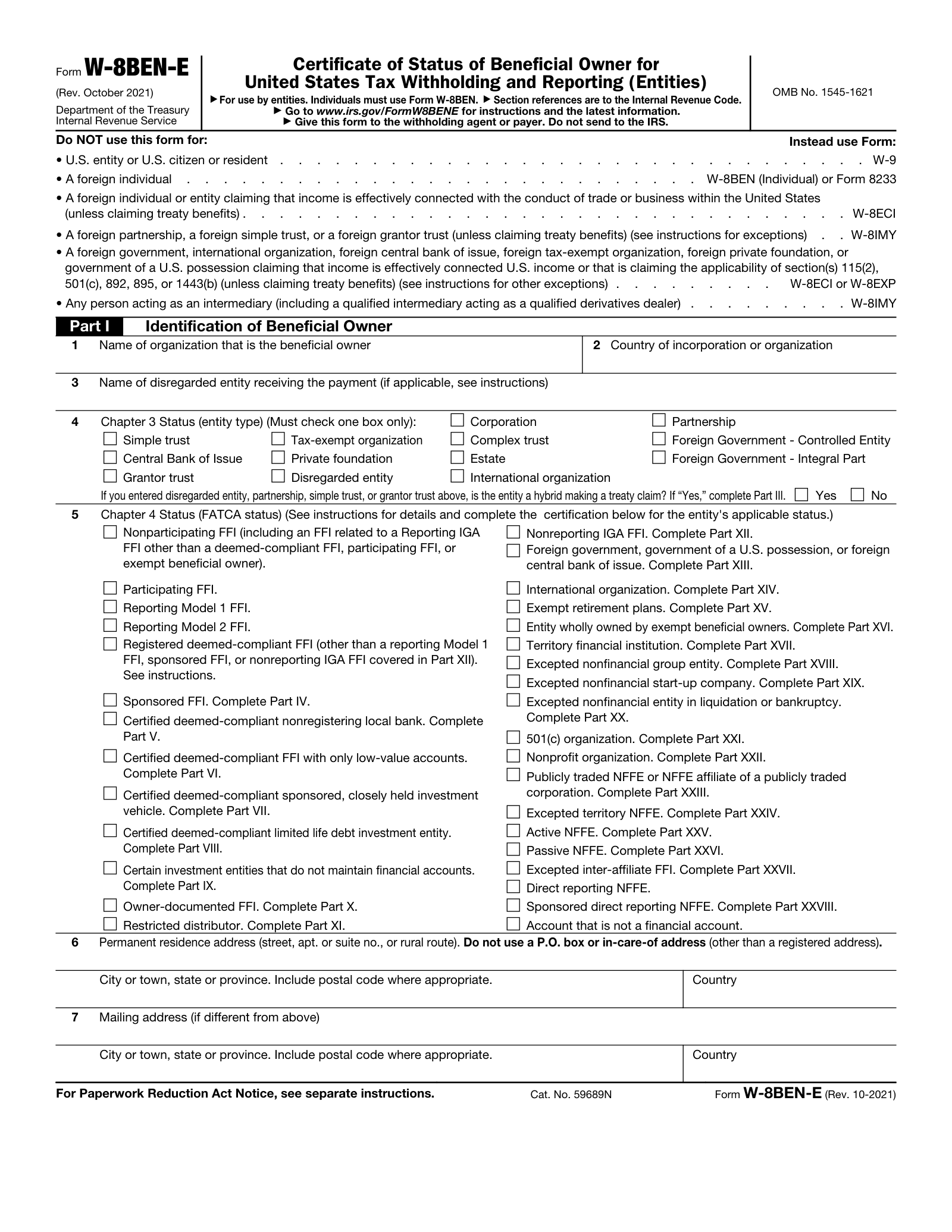
Official form (IRS.gov): Form W-8BEN-E official PDF
- W-8BEN — for an individual. Certifies you are not a US person.
- W-8BEN-E — for a foreign entity.
- W-9 — for a US person or a US entity, such as a US LLC taxed as a corporation.
If your US LLC is a disregarded entity (single-member LLC that has not elected corporate tax treatment), the owner is treated as the taxpayer, so you may be asked for a W-8BEN for the owner rather than a W-8BEN-E for the LLC. If your LLC elects to be taxed as a corporation, you may need an EIN and a W-9.
This is where tax gets specific to your facts — ownership, treaty, entity classification. Talk to a qualified tax professional before you sign a certification you are not sure about.
Frequently Asked Questions
Can I open a Stripe account as a non-US resident without a US LLC? Yes, if Stripe is available in your country of residence. A US LLC unlocks Stripe US, which has different features and payout routes.
How do I get an EIN as a non-resident for payment gateway applications? File Form SS-4 with the IRS by fax or mail. No SSN is required. Expect roughly 1–4 weeks [11].
What is the best payment gateway for a non-resident dropshipping store? Stripe US or Shopify Payments with a US LLC and EIN. Alternatives include PayPal and merchant-of-record services.
How can I receive payouts from Stripe to India? Use Payoneer or Wise to get a US receiving account, link it to Stripe, then withdraw to your Indian bank. Fees and timelines vary.
Do I need to file IRS forms to use Stripe as a non-resident? Stripe may ask for W-8BEN or W-8BEN-E to certify foreign status. With a US LLC, you may provide a W-8BEN for the owner.
What are merchant-of-record services and are they good for non-residents? MoR services like Paddle or Lemon Squeezy handle sales tax and compliance, accept non-residents without a US entity, and charge higher fees. Good for digital products.
If you want help with US LLC formation, EIN and business setup, NexFyla can assist.
*Last updated: April 2026.*
Sources
- [1] US Payment Gateway Options for Global Businesses Explained — https://globalfy.com/blog/us-payment-gateway/
- [2] Suggest a payment gateway for Non US Resident (Reddit) — https://www.reddit.com/r/SideProject/comments/1kfohi5/suggest_a_payment_gateway_for_non_us_resident/
- [3] Top Payment Gateways for non-US Presidents: 7 Best Options in 2026 — https://dodgeprint.com/blog/top-payment-gateways-for-non-us-presidents
- [4] Payment Processor Setup for Non-Resident LLC Owners — https://jamesbakercpa.com/services/payment-setup/
- [5] 11 Best International Payment Gateways (2026) — https://connectpay.com/blog/international-payment-gateways/
- [6] US Payment Processors Guide for Foreign-Owned LLCs — https://armenian-lawyer.com/us/payment-processors-foreign-owned-llc/
- [7] Requirements to open a Stripe account in another country — https://support.stripe.com/questions/requirements-to-open-a-stripe-account-in-another-country
- [8] Requirements for having a US Stripe account — https://support.stripe.com/questions/requirements-for-having-a-us-stripe-account
- [9] How to register a US business as a nonresident — https://stripe.com/resources/more/how-to-register-a-us-business-as-a-nonresident-a-step-by-step-guide
- [10] How to Open a US Stripe Account as a Non-US Resident (2026 Guide) — https://www.youtube.com/watch?v=EXAjAn-1_Xk
- [11] Non-US resident here, need advice on forming a US LLC (Reddit) — https://www.reddit.com/r/stripe/comments/1mw4umq/nonus_resident_here_need_advice_on_forming_a_us/
- [12] Stripe Account for Non-US Residents — https://rocketwave.co/stripe-account-for-non-us-residents-how-to-get-approved-in-2026/
- [13] US Payment Gateway Options for Global Businesses Explained — https://globalfy.com/blog/us-payment-gateway/
- [14] Top Payment Gateways for non-US Presidents: 7 Best Options in 2026 — https://dodgeprint.com/blog/top-payment-gateways-for-non-us-presidents
- [15] Payment Processor Setup for Non-Resident LLC Owners — https://jamesbakercpa.com/services/payment-setup/